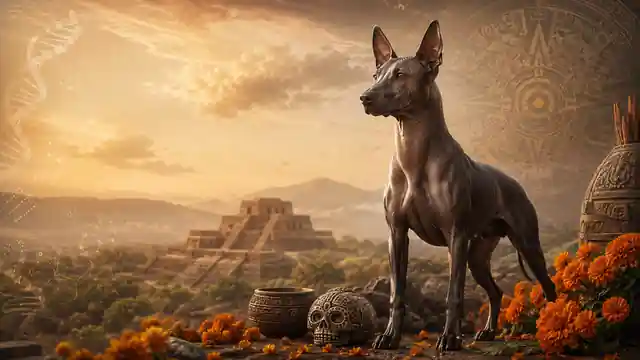
1. Mesoamerican Worldview and Archaeozoological Record
The report presents the Xoloitzcuintli as a spiritual guide or psychopomp created by Xólotl. Explore ritual rules for crossing the Chiconahuapan toward Mictlán, pre-Hispanic canine taxonomy, and descriptions recorded in the Florentine Codex.
Which dog can guide you across the Chiconahuapan?
Select a color to test the Nahua belief described in the report.
Pre-Columbian Canine Taxonomy
Medium common dog with a full coat; guardian, hunter, and companion.
Small short-muzzled dog with a dense coat, a probable ancestor of the modern Chihuahua.
Short limbs, elongated body, and an association with ritual banquets.
Genetic hairlessness and oligodontia; psychopomp toward Mictlán and a source of therapeutic warmth.
Crosses found in Tenochtitlan that the report links to symbols of warfare and fertility.
Colima Ceramics
Burnished clay dog figures served as spiritual effigies in shaft tombs of western Mexico.
The Oxitl ointment myth
Book XI of the Florentine Codex recorded a European belief that resin caused the coat to fall out, overlooking its genetic origin.