Cultural special · Day of the Dead 2026
Day of the Dead 2026: The Xoloitzcuintli Between Memory and Mictlán
Some journeys are not taken on foot. In stories from Nahua tradition, a dog accompanies the soul when the familiar world ends. In homes today, that same attentive face reminds us of something close to us: a story lives on when someone remembers.
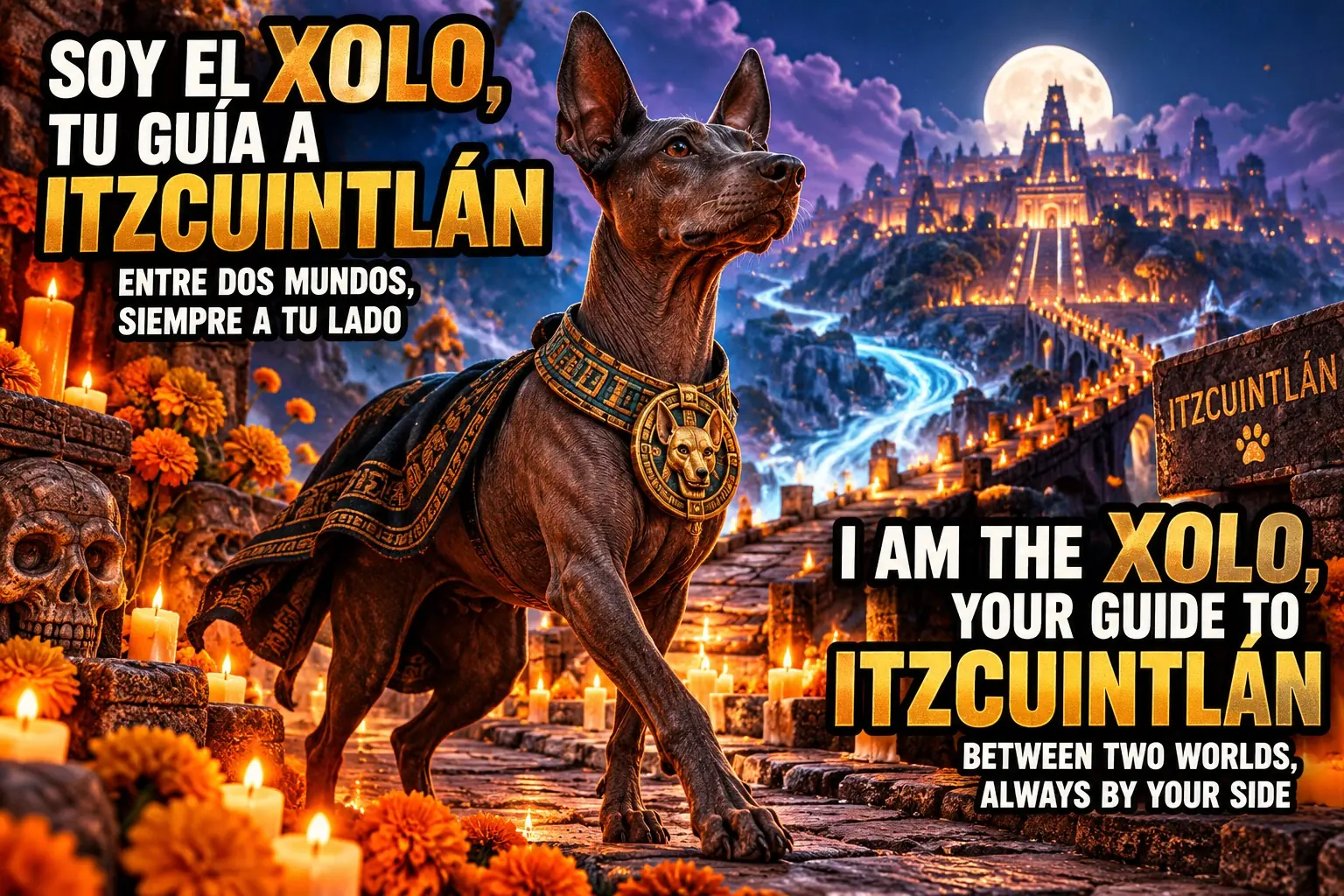
For Day of the Dead 2026, Xolos Ramírez looks at the Xoloitzcuintli through three connected lenses: cultural tradition, family memory, and the everyday lives of the dogs still walking beside us.
The guardian in the story: the Xoloitzcuintli and Mictlán
In narratives associated with Nahua cosmology, the journey of certain souls leads to Mictlán, the realm of the dead. A dog appears as a companion when crossing a river. The image conveys help, relationship, and passage. This is a cultural and symbolic tradition, not a literal claim about what a living dog can do after death.
Stories involving Xólotl, the river separating two shores, and the accompanying dog help explain the Xoloitzcuintli's enduring place in Mexico's cultural imagination. Versions of the stories differ, and present-day Day of the Dead traditions vary by community.
Explore our interactive Mictlán story (Spanish), or read the fuller study of the Xoloitzcuintli and Itzcuintlán (English).
The Xolo and the ofrenda: remembering with cultural care
Many contemporary ofrendas include photographs, marigolds, water, food, and personal objects that recall loved ones. Some families choose to add a clay figure or picture of a Xoloitzcuintli as a reminder of the dog's symbolic role as a companion. There is no single required way to honor memory.
November 1 and 2 are central dates in Mexico's Day of the Dead celebrations, though practices and meanings differ among families and communities. A thoughtful account distinguishes historical narratives, living traditions, and modern artistic interpretations.
Tecuani Ramírez: when Day of the Dead crossed an ocean
The tradition becomes personal in the story of Tecuani Ramírez. At a Day of the Dead celebration in Athens, Greece, he joined Danay Farías, who introduced visitors to the Xoloitzcuintli and its cultural connection with Mictlán. An interactive “Altar of Wishes” invited people to write messages and discover Mexican traditions far from Mexico.

This is where two different stories meet: the symbolic Xolo who accompanies souls in tradition, and Tecuani, a real dog, whose presence created a moment of cultural exchange. Read Tecuani's full story (Spanish).
Memory is something we care for while we are together
Day of the Dead draws our attention to those who are no longer here. The Xoloitzcuintli also invites us to notice those still beside us: the dog who recognizes a familiar hand, learns the way home, or grows old with a family.
At Xolos Ramírez, honoring an ancestral symbol also calls for a very present responsibility: to offer care, rest, companionship, and dignity to each living dog. Memory doesn't begin with a goodbye. We make it every day.
This year, share a photograph or a memory of a Xoloitzcuintli who changed your life. A name, a glance, or a small moment can be enough.
Three stories to explore further
Between ancestry and remembrance, the bond remains. This Day of the Dead, let's honor cultural memory while caring for the Xolos who share our lives.